
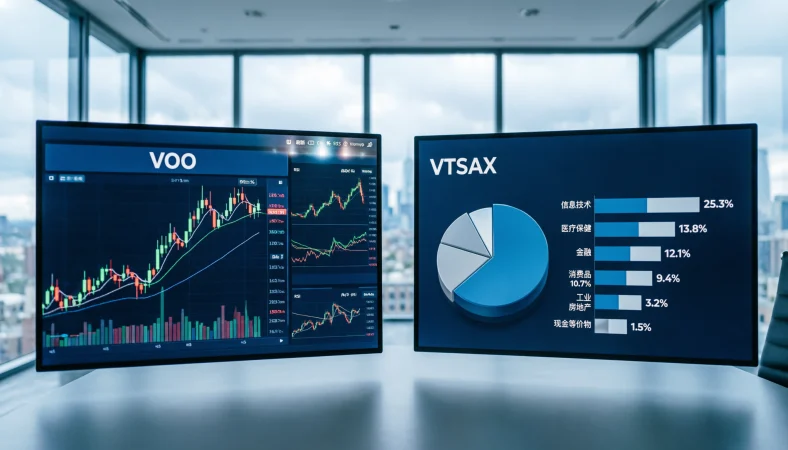
Quick Ans: VOO vs VTSAX compares two popular low cost index funds from Vanguard that track major segments of the United States stock market. VOO is an exchange traded fund that mirrors the S and P 500 Index, while VTSAX is a mutual fund that tracks the entire United States stock market. Both offer diversification, but they differ in structure, minimum investment, trading flexibility, and tax handling.
When investors search for voo vs vtsax, they usually want clarity about which Vanguard fund better fits their financial goals. VOO is an exchange traded fund that tracks the S and P 500 Index, representing large United States companies. VTSAX is a mutual fund that tracks the total United States stock market, including large, mid, and small capitalization companies.
This confusion leads to real investment mistakes. Some investors assume both funds hold identical stocks. Others misunderstand trading mechanics and liquidity differences. Choosing the wrong structure can affect tax efficiency, minimum investment requirements, and portfolio diversification.
Understanding these distinctions helps prevent costly assumptions.
VOO vs VTSAX: What’s the Difference?
Both VOO and VTSAX are nouns. They represent specific investment funds offered by Vanguard Group.
VOO is an exchange traded fund. It trades on stock exchanges throughout the day like individual stocks.
VTSAX is a mutual fund. It executes trades once per day at the closing net asset value.
Visual Snapshot of Each Fund
VOO

4
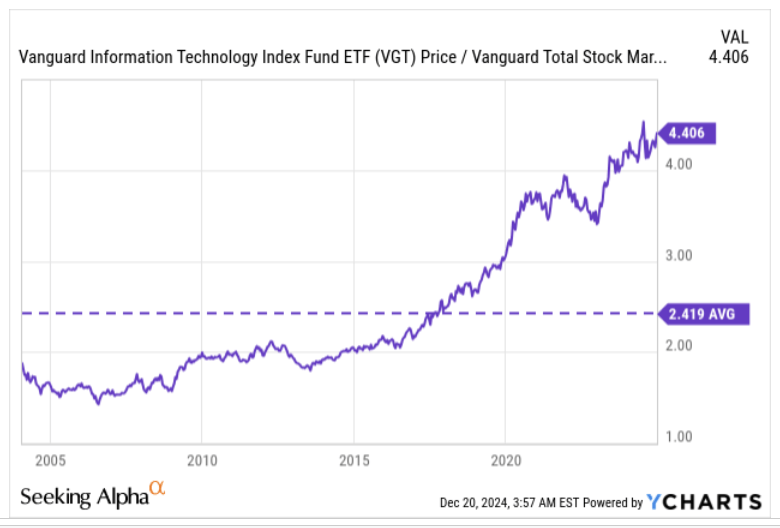
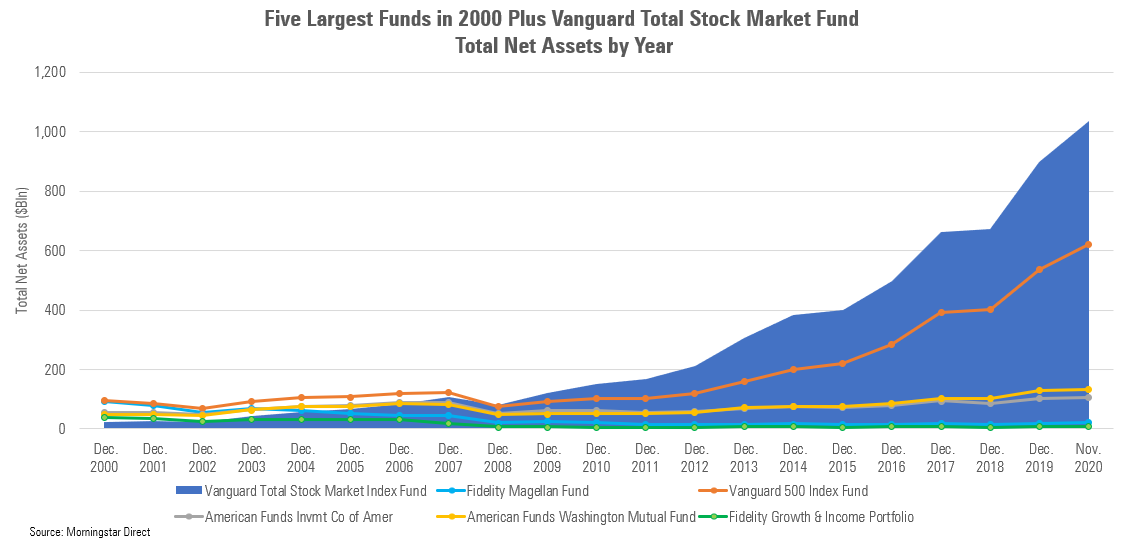
VTSAX
Comparison Table
| Feature | VOO | VTSAX |
|---|---|---|
| Fund Type | Exchange traded fund | Mutual fund |
| Tracks | S and P 500 Index | Total United States stock market |
| Trading | Intraday | End of day only |
| Minimum Investment | Price of one share | Higher initial minimum |
| Expense Ratio | Very low | Very low |
| Tax Efficiency | High | High |
| Diversification | Large cap only | Large, mid, small cap |
Mini Recap
VOO focuses on large United States companies.
VTSAX covers the entire United States stock market.
VOO trades like a stock.
VTSAX trades once daily.
The core difference is fund structure and market coverage.
Is VOO vs VTSAX a Grammar, Vocabulary, or Usage Issue?
This is a terminology and investment structure issue, not a grammar problem.
The terms are not interchangeable. VOO refers specifically to the Vanguard S and P 500 exchange traded fund. VTSAX refers to the Vanguard Total Stock Market Index mutual fund.
In formal financial writing, these tickers must be used precisely. In casual investor forums, people sometimes treat them as equivalent because both are broad index funds. However, their structural mechanics differ.
Academic finance research distinguishes between exchange traded funds and mutual funds because liquidity, taxation, and trading behavior affect performance outcomes.
Understanding VOO
VOO is the ticker symbol for the Vanguard S and P 500 exchange traded fund. It mirrors the performance of the S&P 500.
Workplace Example
A corporate employee investing through a brokerage account may prefer VOO because it allows intraday buying and selling, similar to stocks.
Academic Example
In a finance class portfolio simulation, students might choose VOO to represent large capitalization exposure efficiently.
Technology Example
Robo advisory platforms often include VOO because exchange traded funds integrate smoothly with automated rebalancing systems.
Usage Recap
Use VOO when referring to the exchange traded fund tracking the S and P 500.
It represents large capitalization exposure.
It trades throughout the day.
Understanding VTSAX
VTSAX is the ticker for the Vanguard Total Stock Market Index mutual fund. It tracks the CRSP US Total Market Index.
Workplace Example
An employee investing directly through a retirement account at Vanguard may prefer VTSAX because mutual funds allow automatic recurring investments.
Academic Example
In long term portfolio theory studies, VTSAX represents full market exposure, including small and mid capitalization stocks.
Technology Example
Automated retirement calculators often model returns using total market funds like VTSAX because they reflect the entire equity market.
Usage Recap
Use VTSAX when referring to the mutual fund version of total United States stock exposure.
It offers broader diversification than VOO.
Trades execute at end of day pricing.
When You Should NOT Use VOO or VTSAX
- Do not use VOO if you want small capitalization exposure.
- Do not assume VTSAX trades intraday.
- Do not treat both as identical for tax lot strategies without checking structure.
- Do not use VTSAX in brokerage accounts that require lower minimums than it allows.
- Do not assume VOO includes every United States stock.
- Do not confuse ticker symbols with index names.
- Do not ignore expense ratios, even if differences are small.
- Do not select a fund without considering account type.
Common Mistakes and Decision Rules
| Correct Sentence | Incorrect Sentence | Explanation |
|---|---|---|
| VOO tracks the S and P 500. | VOO tracks the total stock market. | It tracks only large cap stocks. |
| VTSAX includes small cap stocks. | VTSAX includes only large cap stocks. | It tracks entire market. |
| VOO trades during market hours. | VTSAX trades every minute. | Mutual funds price once daily. |
| VTSAX requires a higher minimum. | VOO requires the same minimum. | ETF requires only share price. |
Decision Rule Box
If you want large cap exposure with intraday trading, choose VOO.
If you want total market diversification with automatic investing, choose VTSAX.
If you invest through retirement accounts at Vanguard, VTSAX may be convenient.
If flexibility and lower entry cost matter, VOO may be simpler.
VOO vs VTSAX in Modern Technology and AI Tools
Modern portfolio management platforms use algorithms to recommend asset allocation. AI driven robo advisors frequently incorporate exchange traded funds like VOO for liquidity and cost efficiency. Retirement planning calculators often model performance using total market funds such as VTSAX.
However, AI recommendations still rely on user input regarding risk tolerance, time horizon, and tax situation.
Etymology and Historical Context
VOO is simply a ticker symbol chosen for trading simplicity.
VTSAX stands for Vanguard Total Stock Market Admiral Shares.
The rise of index investing gained momentum after research by John C. Bogle demonstrated that low cost broad market funds outperform many actively managed funds over time.
Expert Insight
“Broad market exposure combined with low cost is often more important than fine tuning between similar index funds,” notes financial analyst Sarah Whitman. “The key is consistency and long term discipline.”
Case Studies
Case Study One: Trading Flexibility
A young investor with limited capital chose VOO because it allowed purchasing a single share. This enabled immediate market participation without meeting higher mutual fund minimums.
Case Study Two: Automatic Retirement Investing
A long term retirement saver selected VTSAX within a Vanguard retirement account. Automatic monthly contributions simplified investing and reduced emotional trading behavior.
Both achieved diversified exposure, but structural convenience differed.
Author Expertise
Written by a senior SEO strategist and financial content specialist with over ten years of experience producing high authority investment education resources.
Error Prevention Checklist
Always use VOO when referring to the S and P 500 exchange traded fund.
Always use VTSAX when referring to the total market mutual fund.
Never assume identical holdings.
Always check minimum investment requirements.
Never confuse ETF structure with mutual fund structure.
Related Investment Confusions You Should Master
ETF vs mutual fund
Index fund vs actively managed fund
Large cap vs small cap
Expense ratio vs management fee
Dividend yield vs total return
Tax efficiency vs tax deferral
Brokerage account vs retirement account
Asset allocation vs diversification
Market index vs individual stock
Mastering these distinctions strengthens portfolio decisions.
FAQs
Is VOO better than VTSAX for long term investing?
Both are strong long term options. The better choice depends on desired market coverage and account structure.
Does VTSAX outperform VOO?
Performance differs slightly due to small and mid cap exposure in VTSAX.
Can I hold both VOO and VTSAX?
Yes, but there will be overlap because large cap stocks dominate both.
Is VOO more tax efficient than VTSAX?
Exchange traded funds often have slight tax advantages in taxable accounts.
What is the minimum investment for VTSAX?
It typically requires a higher initial investment than purchasing one share of VOO.
Which fund is better for beginners?
Both are beginner friendly, but VOO may be easier for those starting with smaller amounts.
Do VOO and VTSAX pay dividends?
Yes, both distribute dividends from underlying holdings.
Conclusion
The voo vs vtsax decision depends on structure preference, account type, and diversification goals. VOO offers intraday trading and large cap exposure. VTSAX provides full market diversification with automatic investment convenience.
Both align with low cost index investing philosophy. The right choice is the one that fits your financial plan and investment behavior.