
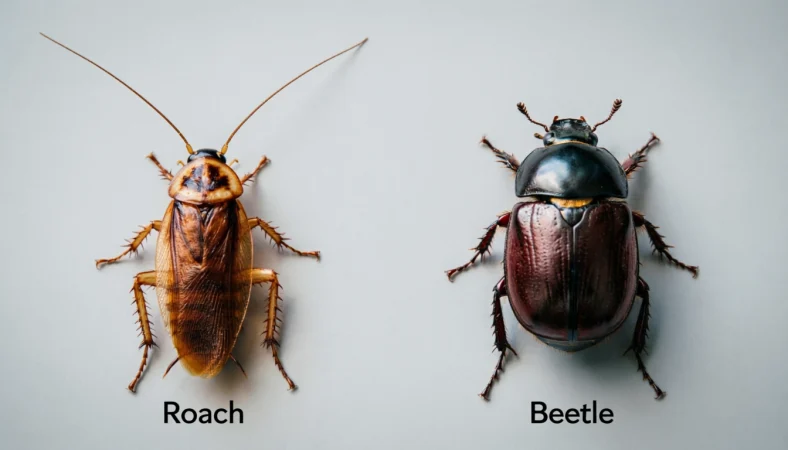
Quick Ans: Roach vs beetle refers to the comparison between cockroaches and beetles, two distinct types of insects that people often confuse due to similar body shape and color. A roach is a fast moving, flat bodied insect from the order Blattodea, while a beetle belongs to the order Coleoptera and typically has hardened wing covers called elytra.
When people search the exact query roach vs beetle, they are usually trying to identify an insect found in their home, garden, or garage. The confusion is understandable. Many beetles are brown or black and similar in size to common cockroaches. However, the biological classification, behavior patterns, and household impact differ significantly.
Misidentification can lead to unnecessary pest control treatments or overlooked infestations. Understanding the difference is essential for accurate identification and effective response.
Roach vs Beetle: What’s the Difference?
Both roach and beetle function as common nouns referring to insect groups.
A roach, commonly called a cockroach, is an insect in the order Blattodea known for flat bodies, long antennae, and rapid movement in dark environments.
A beetle is an insect in the order Coleoptera characterized by hard outer wing covers and diverse species ranging from harmless garden insects to agricultural pests.
Below is a structured comparison.
| Feature | Roach | Beetle |
|---|---|---|
| Scientific Order | Blattodea | Coleoptera |
| Body Shape | Flattened and oval | Rounded or elongated |
| Wing Structure | Soft forewings | Hardened elytra |
| Antennae | Very long and thin | Varies, often shorter |
| Movement | Fast runners | Many move slowly |
| Habitat | Indoors and outdoors | Mostly outdoors |
| Household Risk | Common indoor pest | Usually harmless indoors |
Mini Recap
Roaches are flat and fast.
Beetles have hard wing covers.
Roaches are common household pests.
Most beetles are outdoor insects.
Is Roach vs Beetle a Grammar, Vocabulary, or Usage Issue?
This is a biological identification and vocabulary distinction issue, not a grammar problem.
The terms are not interchangeable. Calling a beetle a roach can cause unnecessary alarm. Calling a roach a beetle can delay pest control action.
In scientific writing, pest control reports, and educational materials, precise terminology is essential. In casual speech, people sometimes use roach loosely, but accuracy matters in practical contexts.
Understanding a Roach in Practical Terms
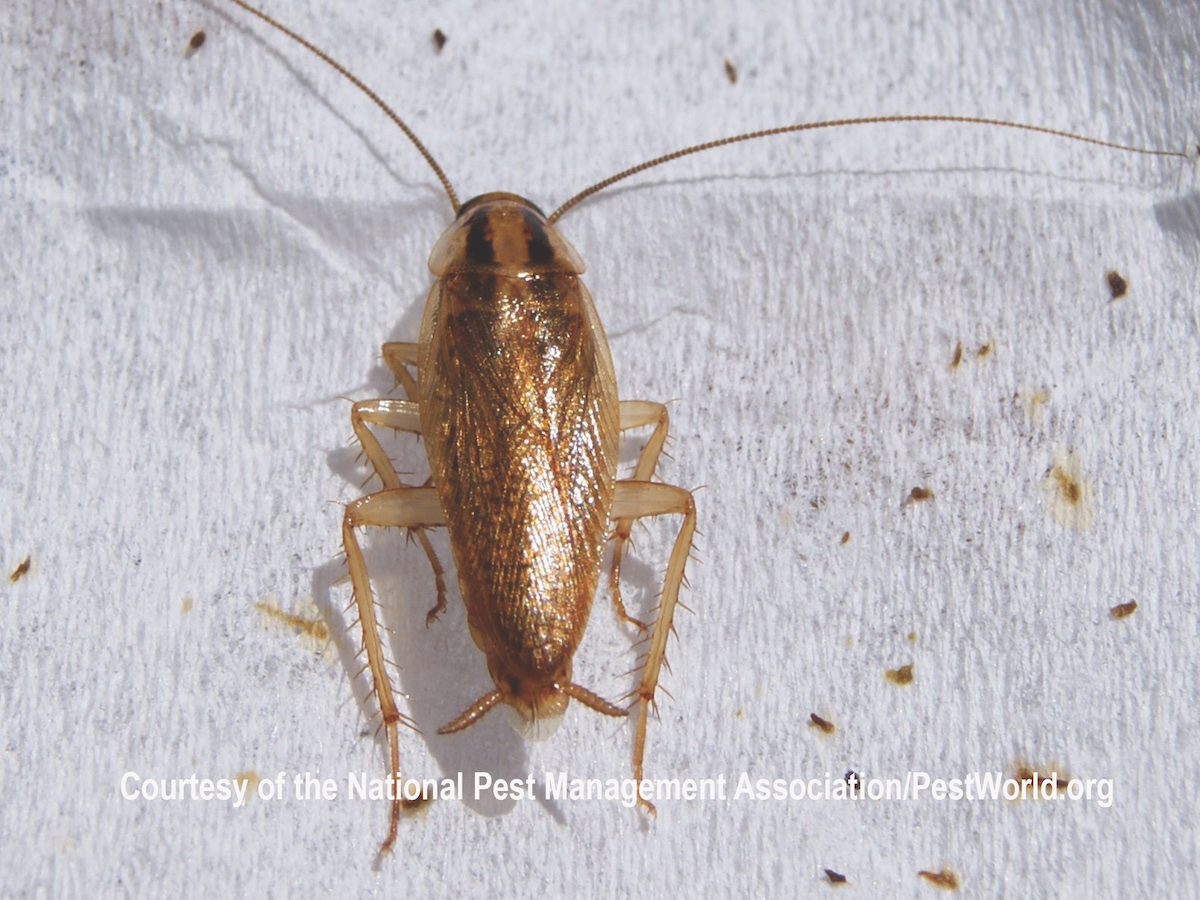
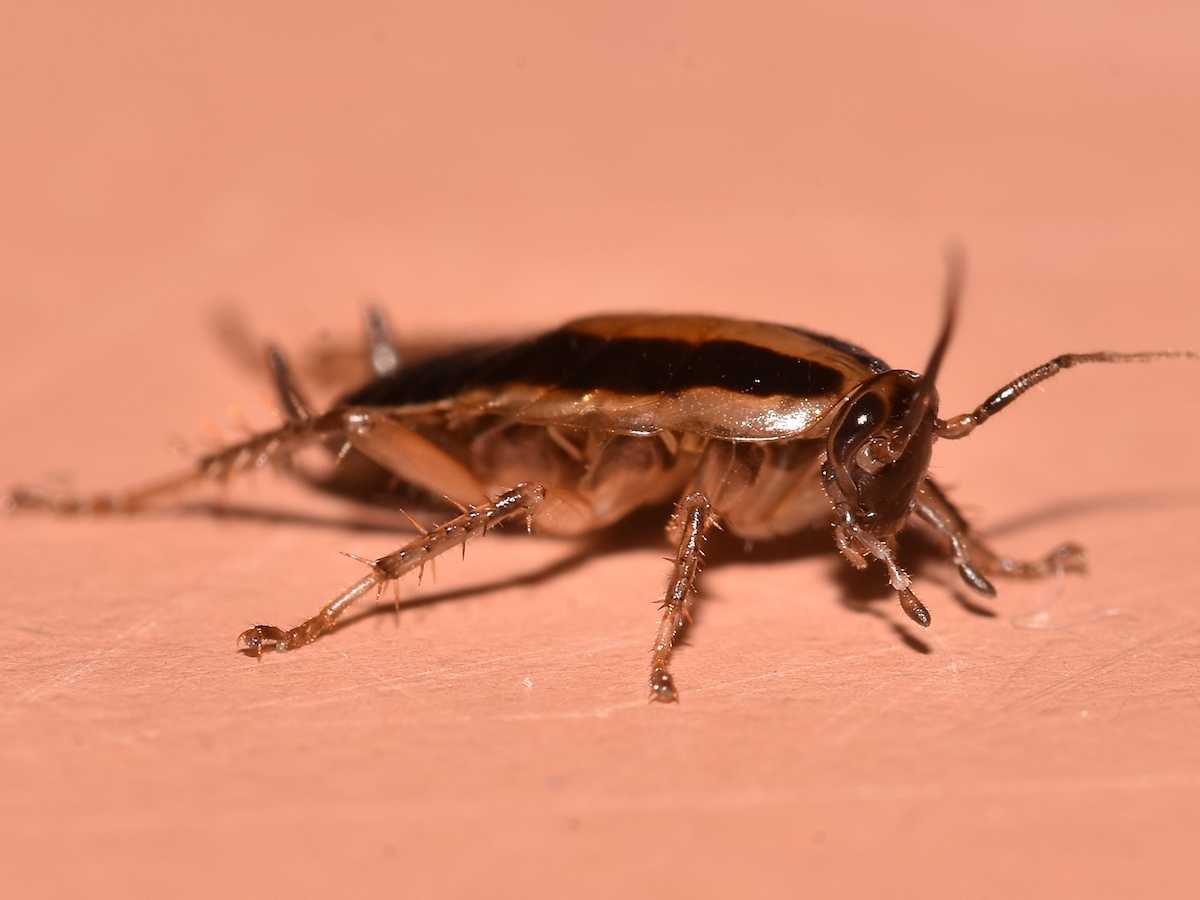
A roach typically refers to common household cockroach species such as the German cockroach or the American cockroach.

Workplace Example
In commercial kitchens, spotting a roach may trigger immediate sanitation protocols due to health code requirements.
Academic Example
In entomology courses, cockroaches are studied for their resilience, nocturnal behavior, and rapid reproduction rates.
Technology Example
Modern pest control companies use digital monitoring traps to track roach movement patterns in buildings.
Usage Recap
Use roach when referring to a cockroach species known for indoor infestations.
Avoid using roach to describe garden insects with hard shells.
Understanding a Beetle in Practical Terms
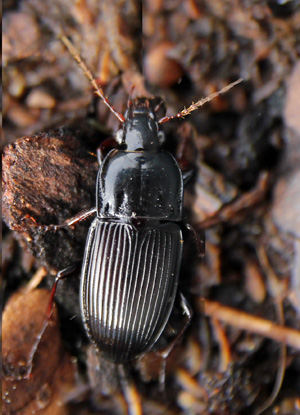
Beetles include thousands of species such as the Lady beetle and the Ground beetle.

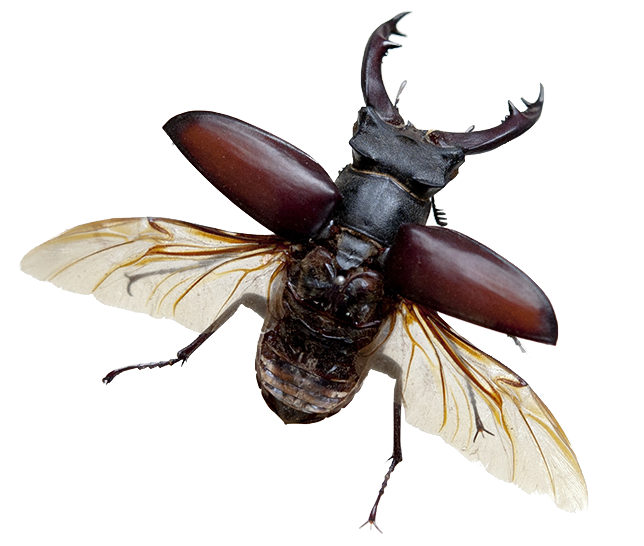
4
Workplace Example
In agricultural settings, certain beetles may damage crops, while others help control pests.
Academic Example
Coleoptera is the largest insect order, frequently referenced in biodiversity studies.
Technology Example
AI powered insect identification apps use image recognition to distinguish beetles from cockroaches based on body structure.
Usage Recap
Use beetle when describing insects with hardened wing covers and diverse outdoor habitats.
Do not use beetle for flat, fast indoor pests that resemble cockroaches.
When You Should NOT Confuse Roach or Beetle
- Do not assume all brown insects indoors are roaches
- Do not ignore long antennae and flat body shape
- Do not rely solely on color for identification
- Do not panic if you see a slow moving beetle near a window
- Do not dismiss a fast moving insect in the kitchen as harmless
- Do not assume beetles infest homes the way roaches do
- Do not confuse wing texture and body structure
- Do not overlook sanitation signs when roaches are present
Common Mistakes and Decision Rules
| Correct Statement | Incorrect Statement | Explanation |
|---|---|---|
| Roaches have flattened bodies. | Beetles are always flat like roaches. | Beetles typically have rounded hard shells. |
| Beetles have hardened wing covers. | Roaches have hard shell backs like beetles. | Roaches have softer forewings. |
| Roaches are common indoor pests. | All beetles indicate infestation. | Many beetles are harmless. |
Decision Rule Box
If the insect is flat, fast, and found in kitchens at night, it is likely a roach.
If the insect has a hard shell back and is found outdoors or near lights, it is likely a beetle.
Roach and Beetle in Modern Identification Technology
Smartphone apps now allow homeowners to photograph insects and receive instant species suggestions using machine learning. Pest control professionals also use digital inspection tools to identify structural risk factors that attract roaches.
Beetles, due to their vast diversity, are frequently logged in biodiversity databases and environmental monitoring systems.
Etymology and Scientific Background
The word roach is a shortened form of cockroach, derived from the Spanish word cucaracha.
The term beetle comes from Old English bitela, referring to a biting insect.
The scientific order Coleoptera means sheath wing, referencing the hardened wing covers unique to beetles.
Case Study One:
A tenant spotted a brown insect and assumed a roach infestation. A pest control inspection revealed it was a ground beetle entering through a window gap.
Result: No infestation treatment required, saving cost and stress.
Case Study Two:
A small restaurant dismissed sightings as beetles. Inspection confirmed German cockroaches in storage areas.
Result: Immediate sanitation overhaul prevented further violations.
Author Expertise
Written by a senior SEO strategist and language authority with extensive experience optimizing scientific comparison content for clarity and search performance.
Error Prevention Checklist
Always examine body shape carefully.
Always check antenna length.
Never rely only on color.
Never ignore repeated indoor sightings.
Always consult professionals if infestation signs appear.
Related Insect Confusions You Should Master
Termite vs ant
Moth vs butterfly
Wasp vs bee
Cricket vs grasshopper
Silverfish vs centipede
Spider vs insect
Stink bug vs beetle
Carpet beetle vs roach
FAQs
How can I tell if it is a roach or a beetle?
Look at body shape and wing structure. Roaches are flat with long antennae. Beetles have hardened wing covers.
Are beetles as dangerous as roaches?
Most beetles are harmless. Roaches can contaminate food and surfaces.
Do beetles infest kitchens?
Rarely in the same way roaches do.
Can roaches fly like beetles?
Some species can glide or fly short distances, but behavior differs.
Why do beetles enter homes?
Often attracted to light or shelter, not food waste.
Are roaches and beetles related?
They are both insects but belong to different scientific orders.
Should I call pest control for one beetle?
Usually not, unless multiple insects appear consistently indoors.
Conclusion:
Understanding roach vs beetle is essential for accurate identification and proper response. Roaches are flat, fast, and commonly associated with indoor infestations. Beetles have hard wing covers and are typically outdoor insects with diverse roles in ecosystems.
Correct identification prevents unnecessary panic, avoids wasted expense, and ensures appropriate action when real pest problems occur.